
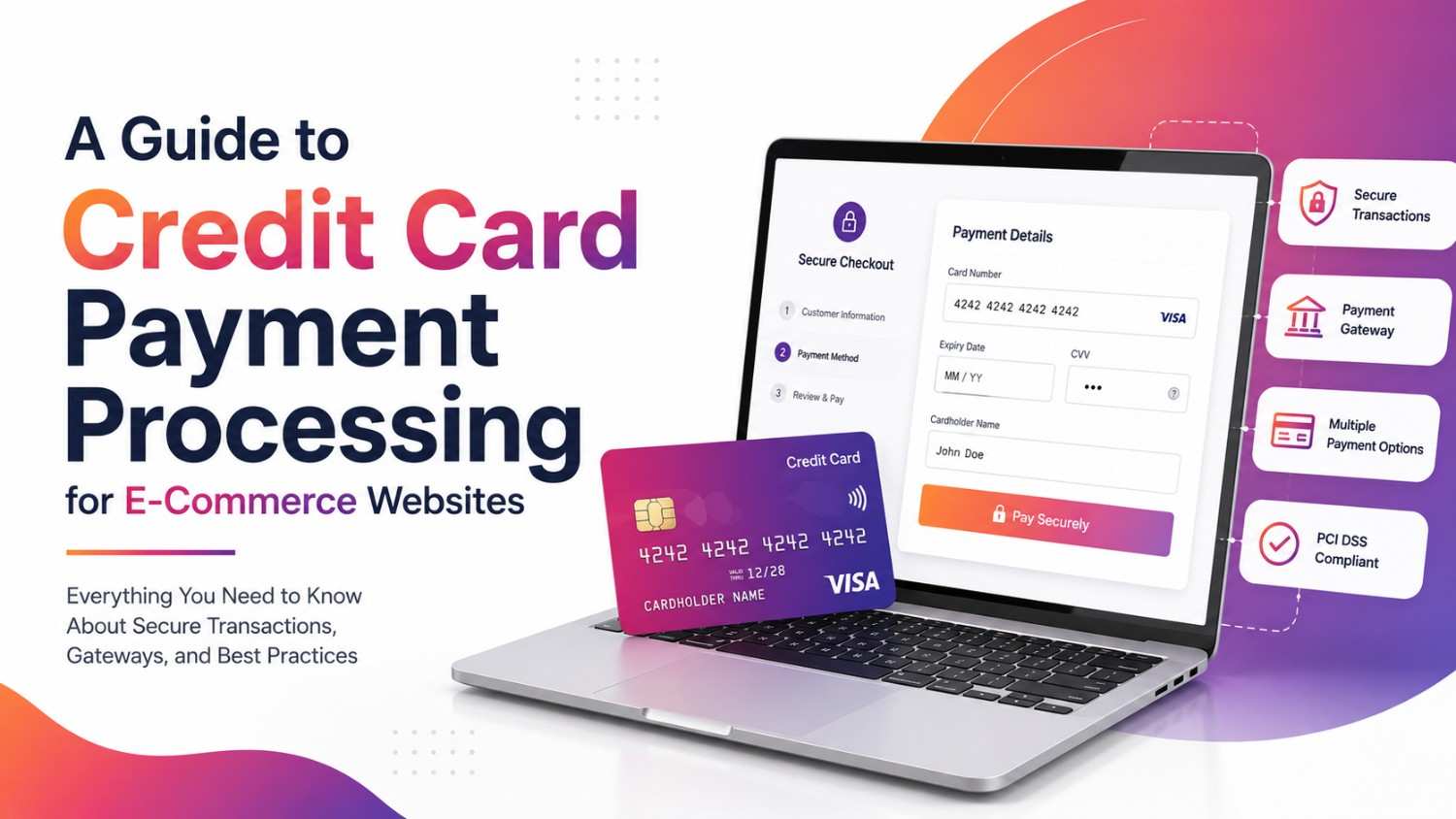
Quick answer: Credit card payment processing for e-commerce runs through five parties — customer, merchant, payment gateway, payment processor, and the issuing/acquiring banks — who together authorize, verify, and settle a transaction in seconds. Most online stores choose among Stripe, PayPal, and Square, with 2026 pricing close to 2.9% + $0.30 per transaction for standard online payments, though rates vary based on monthly fees, volume discounts, and international cards. The right choice depends on transaction volume, whether you need recurring billing, and how much developer flexibility you want.
An e-commerce payment system is important. This allows stores to accept online payments. It means securely sending financial information between consumers, merchants, and payment providers.
In short, the payment process begins with the customer’s credit authorization. Once the payment is authorized and processed, the transaction is completed. When working on e-commerce website development, you need to know how to process payments. This is key to secure and effective communication.
Let’s take a look at some popular eCommerce payment options. They can speed up payments and enhance the customer experience.
Understanding Credit Card Payment Processing
Credit card payment processing involves several components and multiple entities working together to complete a transaction. Understanding these components is crucial for optimizing your e-commerce website to handle credit card payments efficiently and securely.
Here’s a detailed overview of the essential components and their interactions:
- Customer: The cardholder who initiates the transaction.
- Merchant: The e-commerce business selling the product or service.
- Payment Gateway: The technology that captures and sends credit card data from the customer to the payment processor.
- Payment Processor: The company that handles the transaction details, ensuring the funds are transferred from the customer’s bank to the merchant’s account.
- Issuing Bank: The bank that issued the customer’s credit card.
- Acquiring Bank: The merchant’s bank, which receives the transaction details and eventually the funds.
How the Payment Process Works When a Customer Reaches The Checkout Page
- The customer selects a product on the e-commerce website, proceeds to checkout, and enters their credit card information.
- The payment gateway encrypts the information and sends it to the payment processor, which contacts the issuing bank for authorization based on available funds and fraud checks.
- The issuing bank approves or declines the transaction, and the payment processor notifies the gateway, merchant, and customer.
- If approved, funds are transferred to the acquiring bank and deposited into the merchant’s account.
Also Read: How To Set Up Shopify Store
Choosing a Payment Gateway
Choosing the right payment gateway is essential for the success of your e-commerce web design and development. A well-chosen payment gateway ensures seamless transactions, enhances customer trust, and protects sensitive information. Here are some key factors to consider when selecting a payment gateway for your online store:
- Security: Ensuring the security of your transactions is paramount. Select a PCI DSS-compliant gateway to protect your customers’ credit card information. Look for additional security features like encryption and tokenization to further safeguard data against breaches and fraud.
- Fees: Understanding a payment gateway’s fee structure is crucial for managing your costs. Evaluate all associated fees, including transaction fees, setup fees, and monthly fees. Compare different gateways to find the most cost-effective option without compromising on quality or service.
- Integration: Seamless integration with your e-commerce platform is vital for a smooth user experience. When considering e-commerce solutions, check for compatibility with your current system and the ease of integration. A gateway that integrates seamlessly will save you time and reduce the risk of technical issues.
- Customer Experience: The payment gateway you choose should enhance the customer experience on your site. Look for features such as mobile optimization, support for multiple payment options, and an intuitive user interface. These features can help reduce cart abandonment and increase customer satisfaction.
- Support and Reliability: Reliable customer support and high uptime are critical to maintaining smooth operations. Choose a payment gateway provider known for its dependable customer service and minimal downtime. This ensures that any issues can be quickly resolved, keeping your transactions flowing smoothly.
Taking the above factors into consideration, you can choose the best payment gateway for your e-commerce website. There are many popular payment gateways that you can choose from such as PayPal, Stripe, Square, Authorize.Net, and many more.
How To Implement Payment Processing?
Implementing a credit card payment processing system involves several steps. Here’s a step-by-step guide:
- Choose Your Payment Gateway: Based on the factors mentioned above, select a payment gateway that fits your business needs.
- Set Up a Merchant Account: You’ll need one to receive payments. Some payment gateways provide this service, while others require you to set it up separately.
- Integrate the Payment Gateway: Use the API documentation from your chosen payment gateway to integrate it with your website. This may require some technical knowledge or assistance from a developer.
- Configure Security Settings: Ensure all transactions are encrypted, and your site is PCI DSS compliant.
- Test the System: Before going live, thoroughly test the payment processing system to ensure it works seamlessly and securely.
- Monitor and Maintain: Regularly review transactions for issues or fraudulent activity, and keep your system up to date.
- Implement Security Practices: Security is paramount in credit card payment processing and involves adhering to PCI-DSS standards, using SSL certificates for data encryption, implementing tokenization to protect sensitive information, utilizing fraud detection tools like AVS and CVV checks, and conducting regular security audits to identify and address vulnerabilities
Enhancing Customer Experience
A seamless payment process enhances the overall customer experience. Here are tips to achieve this:
- Simplified Checkout Process: Minimize the number of steps required to complete a purchase.
- Mobile Optimization: Ensure the payment gateway works well on mobile devices.
- Multiple Payment Options: Offer various payment methods, including credit/debit cards, digital wallets, and alternative payment options.
- Transparent Pricing: Display prices, taxes, and shipping costs to avoid any surprises at checkout.
- Customer Support: Provide easy access to customer support in case of payment issues.
Conclusion
A reliable payment system is one of the highest-leverage parts of your e-commerce stack — it directly shapes conversion, trust, and repeat purchases. Getting the gateway choice, security setup, and checkout UX right from the start avoids costly rework later. A website design and development company in the USA can help you implement a payment system that’s secure, well-integrated, and tailored to your specific customer base.
Frequently Asked Questions
What is the safest payment gateway for a small e-commerce store?
Stripe, Square, and PayPal all meet PCI-DSS standards and are considered safe for small stores. The safest setup, regardless of provider, always includes tokenization, SSL encryption, and never storing raw card numbers on your own servers.
How much does it cost to accept credit cards online in 2026?
Most standard online transactions cost around 2.9% + $0.30 per transaction with Stripe and Square, while PayPal’s Standard plan is slightly higher at 2.99% + $0.49. Actual cost depends on volume, plan tier, and whether cards are international.
Is it safe to store credit card details on an e-commerce site?
Storing raw card data yourself significantly increases the risk of a breach and the PCI DSS scope. Most modern gateways solve this with tokenization — a token representing the card is stored instead of the actual number, so a breach of your systems doesn’t expose real card data.
Why do most online stores prefer credit cards over other payment methods?
Credit cards remain dominant because of near-universal consumer adoption, fast authorization (1–3 seconds), and built-in fraud protections like chargebacks — which benefit both shoppers and merchants.
Can I use more than one payment gateway on the same store?
Yes — many stores run a primary gateway (e.g., Stripe) alongside PayPal as an alternative checkout option, since offering a recognized second option can reduce cart abandonment for buyers who prefer it.
What’s the difference between a payment gateway and a payment processor?
The gateway captures and encrypts the transaction data at checkout; the processor is the company that actually routes that data to the banks, checks for fraud, and settles funds. Some companies (like Stripe and Square) function as both.