
When most people hear the term “artificial intelligence” (AI), they picture futuristic robots or scenes from sci-fi movies. But in today’s world, AI is less about androids and more about powerful technologies that can analyze vast amounts of data, make predictions, and help businesses make smarter decisions.
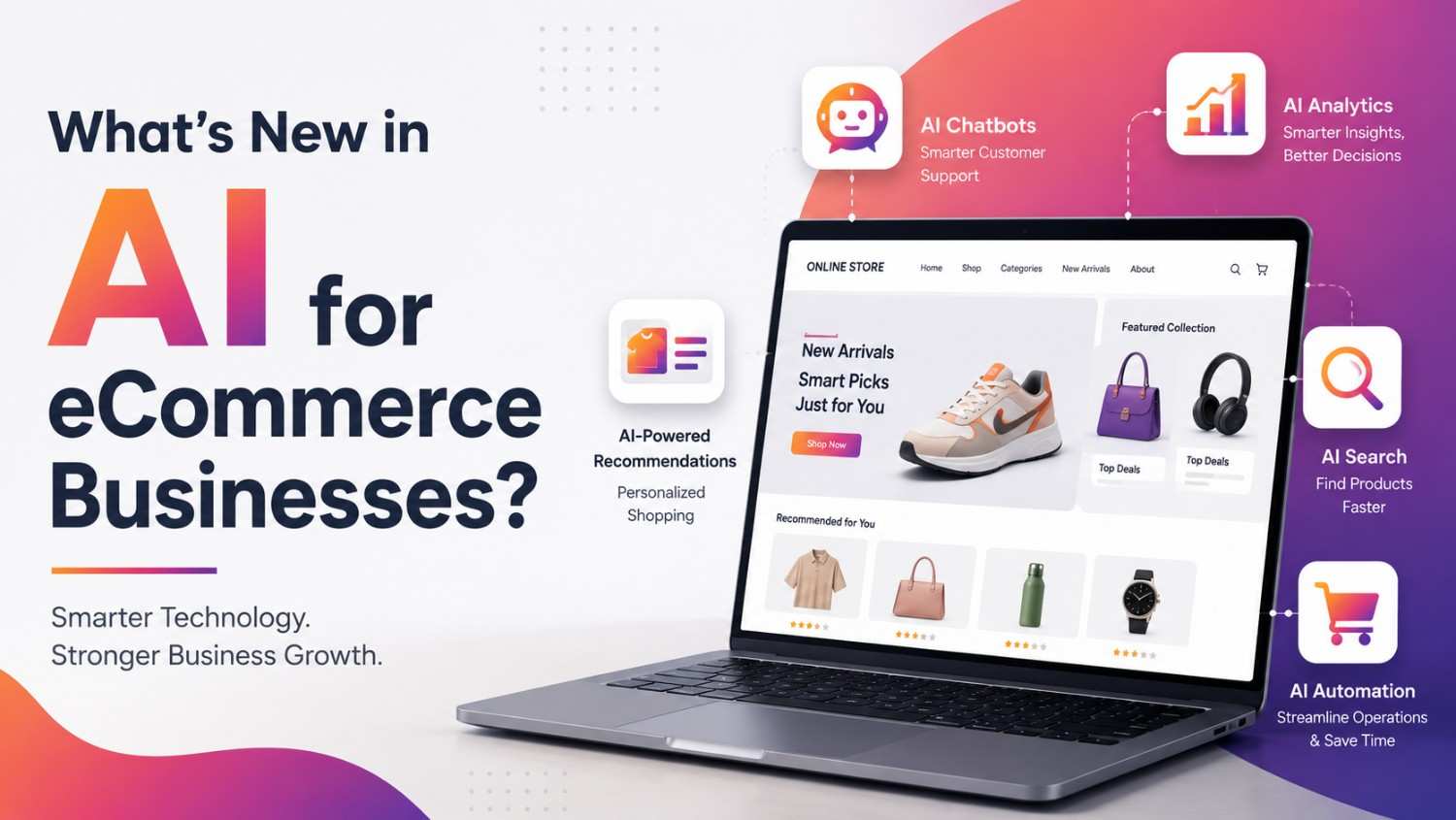
AI is significantly changing the way companies operate in today’s e-commerce environment. From tailored product recommendations to automated support solutions, from best-of-quality logistics to predictive analytics. Whether you run a worldwide brand or a tiny online store, AI Services may change your client interaction, increase productivity, and raise revenue.
Let’s explore how AI fits into ecommerce, the role of AI, and how your business can benefit by adopting it.
Understanding the Role of AI in eCommerce
In e-commerce, AI isn’t just about automation; it’s about intelligence. Fundamentally, artificial intelligence models and algorithms allow one to replicate human thought processes. In the e-commerce environment, this might show up as systems suggesting products based on browsing behaviour, chatbots responding to consumer questions, or tools examining user sentiment to customise marketing plans.
To understand how AI is transforming ecommerce, it’s important to first explore the key technologies that drive it:
1. Machine Learning (ML)
Machine learning lets systems progress automatically by using data without any development instructions. eCommerce websites rely on machine learning techniques to understand their clients’ preferences. When they analyze customer interests, it’s easier to recommend product purchases.
2. Natural Language Processing (NLP)
Natural language processing helps systems to understand human language, just as artificial intelligence techniques let computers grasp human speech. Chatbots, digital assistants, and automatic responses to emails all start with natural language processing. NLP allows one to quickly answer questions or help with various text-related tasks.
3. Computer Vision
AI can interpret visual data, such as identifying products in images or detecting customer sentiment from facial expressions in videos. This is especially useful for visual search and enhancing product discovery.
4. Predictive Analytics
AI uses historical and real-time data to forecast trends, customer behavior, and sales outcomes. Retailers can use this information to handle stock better, create focused marketing plans, and improve their prices.
Together, these AI capabilities are transforming the way ecommerce businesses operate and how customers experience online shopping.
Benefits of Artificial Intelligence in eCommerce
Adopting AI isn’t just about keeping up with trends; it’s about gaining real, measurable advantages. Here are some of the biggest benefits AI brings to ecommerce:
1. Personalized Customer Experience
Today’s consumers expect personalization. They want online stores to know their preferences, suggest relevant products, and tailor communications just for them.
AI analyzes customer data—like browsing history, past purchases, and clicks—to create detailed profiles. This enables personalized product recommendations, customized emails, and tailored homepage experiences.
For example, Amazon’s “You might also like…” suggestions are powered by AI, which increases the likelihood of a purchase and keeps customers engaged longer.
2. Smarter Search and Visual Discovery
Have you ever searched for a product but couldn’t find the right words to describe it? AI-powered search engines understand context and intent, not just keywords. This improves search accuracy and helps users find products faster.
Some ecommerce platforms now offer visual search, where customers upload an image and the AI suggests similar products. This is especially useful in fashion, furniture, and lifestyle products, where visual appeal matters.
3. Efficient Customer Support with Chatbots
AI-driven chatbots are revolutionizing customer service. Available 24/7, they can answer FAQs, assist with orders, track shipments, and even help customers choose the right product.
Because chatbots handle routine queries, human agents can focus on more complex issues. This not only speeds up response time but also improves overall customer satisfaction.
4. Optimized Inventory and Demand Forecasting
AI helps e-commerce businesses predict demand, manage inventory levels, and prevent overstocking or stockouts.
By analyzing historical sales data, seasonal trends, and real-time customer behavior, AI can forecast future demand more accurately than traditional methods. This leads to better stock management and reduces lost sales opportunities.
5. Dynamic Pricing Strategies
AI helps adjust prices in real-time by analyzing what people want, what others charge, and how shoppers behave. This is called dynamic pricing.
Retailers can maximize profits by increasing prices when demand is high and offering discounts during slow periods. With AI, these adjustments happen automatically, giving ecommerce businesses a competitive edge.
6. Fraud Detection and Enhanced Security
AI plays a critical role in detecting unusual transaction patterns and preventing fraud. It can flag suspicious activities, like multiple purchases from the same IP address or inconsistent billing information, before they escalate.
This helps protect both the business and its customers from financial loss and data breaches.
7. Improved Marketing Campaigns
AI can analyze customer segments, preferences, and buying patterns to help e-commerce marketers design more effective campaigns. This includes everything from targeting ads to deciding the best time to send emails.
With AI-powered tools, marketers can run A/B tests, analyze customer feedback, and fine-tune strategies for better ROI.
8. AI Shopping Agents Are Changing How Customers Buy
The newest shift in ecommerce isn’t AI helping you run your store — it’s AI shopping for your customers. Agentic commerce refers to AI agents that research, compare, and in some cases complete a purchase on a shopper’s behalf, without the person browsing your site directly.
This isn’t a future trend anymore — it’s already showing up in the numbers. Salesforce found that during Cyber Week 2025, AI and AI agents influenced $67 billion in global sales, touching roughly one in five orders placed worldwide. Shopify also reported that orders arriving from AI-powered searches on its platform grew dramatically in early 2026 compared to the year before. McKinsey projects the agentic commerce opportunity could reach $3–5 trillion globally by 2030.
What this means for your store:
- Product data needs to be structured and machine-readable (clean titles, accurate specs, current pricing) so AI agents can find and recommend you
- Shoppers may never see your homepage — they may arrive via an AI agent that already narrowed their choice down to you
- Trust and transparency (return policies, shipping details, reviews) matter even more, since AI agents often weigh these before recommending a product
Smaller and mid-size stores don’t need to build their own AI agent to benefit — the priority right now is making sure existing AI shopping tools (ChatGPT, Gemini, Perplexity) can actually read and recommend your catalog.
9. Getting Found in AI Search (Not Just Google)
Alongside agentic commerce, a growing share of shoppers now research products by asking AI tools directly instead of typing a search query into Google. Optimizing for this — often called Generative Engine Optimization (GEO) — is becoming as important as traditional SEO.
A few practical steps that help AI tools discover and recommend your store:
- Write in clear, direct language. AI tools tend to pull and paraphrase content that answers a question plainly, rather than pages built purely around keyword density.
- Add structured data (schema markup). Product, price, availability, and review schema make it easier for AI systems to accurately represent your store.
- Publish real specifics. Vague marketing copy gets skipped; concrete details (materials, sizing, compatibility, exact pricing) get cited.
- Keep FAQ content on key pages. AI tools frequently pull directly from FAQ-style content when answering shopper questions.
- Maintain consistent product data across channels. AI agents cross-reference your website, marketplace listings, and reviews — inconsistencies reduce trust and visibility.
This is a new discipline for most ecommerce teams, and getting ahead of it now is far easier than retrofitting it once AI-driven traffic becomes a larger share of your sales.
Real-Life Examples of AI in eCommerce
Many leading e-commerce brands already use AI to stay ahead:
- Amazon uses AI for personalized recommendations, voice shopping via Alexa, and warehouse automation.
- Shopify offers AI tools like Shopify Magic to help merchants write product descriptions and automate email marketing.
- Zalando, a European fashion retailer, uses AI to recommend outfit combinations and optimize product images.
- Sephora uses AI chatbots to guide users through skin analysis and makeup recommendations.
These examples show that AI isn’t just for tech giants—smaller businesses are increasingly integrating AI into their operations to deliver better service and grow faster.
How to Integrate AI Into Your eCommerce Operations
If you’re considering adding AI to your e-commerce business, here’s a simple roadmap to begin:
1. Start with Clear Goals
Determine what you want to achieve. Is it better customer service? Increased sales? Improved inventory management? Make sure your AI plan fits your main business goals.
2. Choose the Right Tools
There are many off-the-shelf AI tools and ecommerce platforms with built-in AI capabilities. Look for solutions that fit your budget and needs—whether it’s chatbots, personalization engines, or pricing automation.
3. Leverage Your Data
The training data of AI determines its functionality. Ensure all customer data is gathered and organized systematically including purchase records and online activity.
4. Test and Improve
Implement AI solutions to one particular segment and analyze the results before scaling the implementation. Continuously use feedback combined with customer reviews and performance data to enhance service offerings.
5. Invest in Training or Partnerships
If AI implementation feels overwhelming, consider working with experts or third-party vendors. They can help set up and manage AI tools tailored to your ecommerce business.
Conclusion: AI Is No Longer Optional in eCommerce
AI has moved past being a competitive edge — it’s becoming baseline infrastructure for how ecommerce works. Beyond personalization, chatbots, and demand forecasting, the businesses winning in 2026 are also thinking about how AI shopping agents discover them and how their store shows up in AI search results, not just Google.
You don’t need to implement everything at once. Start with one or two high-impact areas — a chatbot, better product data structure, or AI-assisted personalization — and build from there.
Frequently Asked Questions
Is AI affordable for small ecommerce businesses, or is it only for large retailers?
Most AI tools relevant to small stores — chatbots, email personalization, product recommendation apps — are available as affordable add-ons or built directly into platforms like Shopify, so there’s no need for a large upfront investment.
What’s the easiest AI feature to start with on Shopify?
Built-in tools like Shopify Magic (AI-generated product descriptions and email copy) and a basic AI chatbot app are typically the fastest to set up and show value quickly.
Do AI shopping agents actually buy things automatically, or do they just help customers research?
Both, depending on the platform. Today, most AI agents primarily help shoppers research and compare products, but transaction-capable agents are expanding quickly, and several major platforms already support AI-assisted checkout.
How is AI different from regular ecommerce automation?
Traditional automation follows fixed rules (if X happens, do Y). AI adapts based on patterns in data, so its recommendations, pricing, or responses improve and change as it learns from new customer behavior.
Will AI replace the need for a human customer service or marketing team?
No — AI handles repetitive, high-volume tasks (FAQs, basic personalization, initial pricing adjustments) so your team can focus on higher-value work like complex support issues and strategy.