
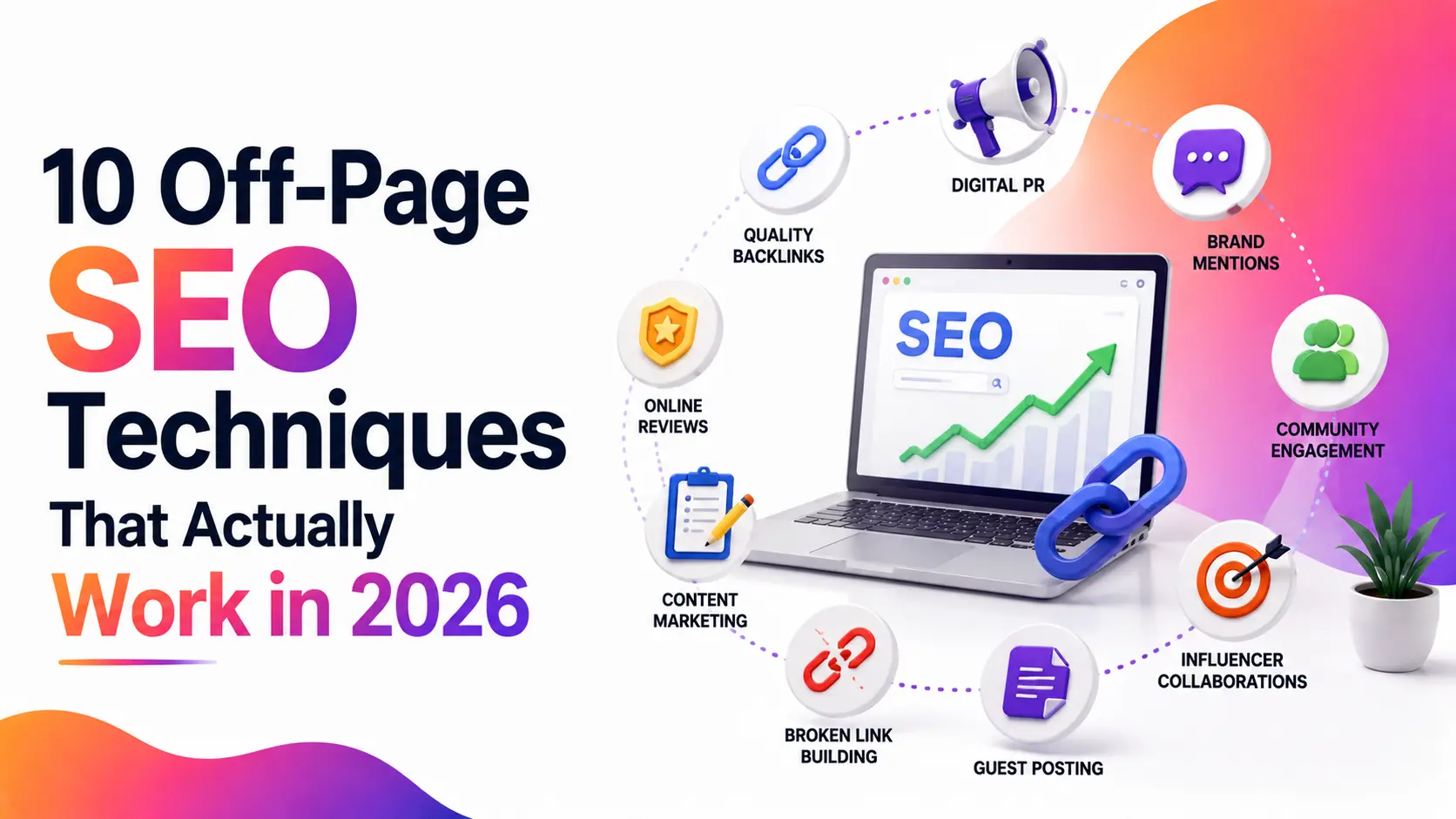
Quick answer: The off-page SEO techniques that work best in 2026 are link earning (creating content others cite naturally), unlinked brand mention reclamation, digital PR, broken link building, authentic community participation, expert quotes and podcast guesting, active social presence, accurate local listings, review generation, and prioritizing link quality over quantity. Mass directory submissions, article spinning, and generic social bookmarking no longer help and can hurt your backlink profile.
If you’ve been building links the same way for years, it’s time for an update. Off-page SEO has changed shape. It’s no longer just “get more backlinks” — search engines, and now AI tools like ChatGPT, Gemini, and Perplexity, are paying closer attention to whether real people and real publishers actually trust you.
The good news? The tactics that work now are more honest, more sustainable, and more interesting than the old spray-and-pray link-building playbook. Here’s what’s worth your time in 2026 — and a couple of things you can safely stop doing.
First, a quick reality check
Off-page covers everything that happens away from your website that still affects how you rank: backlinks, brand mentions, reviews, social proof, and how often other credible sources reference you. Think of it this way — your website is what you say about yourself. Off-page SEO is what everyone else says about you.
It matters more than ever, not less. Google searches now end without a click more than two-thirds of the time, according to SparkToro’s 2026 clickstream analysis, which means more people are getting their answer from an AI Overview or chatbot instead of visiting a site directly. The same authority signals that used to move your rankings now also influence whether ChatGPT, Perplexity, or Gemini cite your brand in their answers.
One more thing before we get into the list: this isn’t a quick win. Most off-page strategies need three to six months of consistent effort before you see real movement. If you’re expecting overnight results, you’ll probably quit right before it starts working.
1. Earn links instead of chasing them
Link earning means creating content so valuable that other sites cite it on their own, instead of you emailing strangers and asking for a favor.
The old approach was outreach emails begging for a link. The better approach is to create something people want to reference—because it genuinely helps them, not because you asked.
That means original research, data studies, free tools or calculators, and genuinely thorough guides — the kind of content people bookmark and reference months later. This is called “link earning,” and it’s the most durable link-building strategy you can invest in right now.
2. Go after unlinked brand mentions
Unlinked mention reclamation means finding places online that already mention your brand without linking to you, then asking for the link. Chances are, people are already talking about your brand online — in articles, forums, or roundups — without linking back to you. This is one of the easiest off-page SEO wins, and most businesses never bother checking.
Set up a Google Alert (or use a free-tier mention tracker) for your brand name, then reach out politely and ask if they’d mind adding a link. It’s a five-minute email that can land you a link from a site that already trusts you enough to mention you.
3. Invest in real digital PR
Digital PR means pitching genuine stories, data, or expert commentary to journalists so your brand earns coverage from respected outlets — and it’s quietly become one of the highest-leverage off-page tactics in 2026. This isn’t a press release blasted to 500 random outlets — it’s pitching genuinely newsworthy stories, original data, or expert commentary to journalists and industry publications who actually cover your space.
A single feature in a relevant, respected outlet can outperform dozens of low-quality links combined, both for rankings and for how often AI tools cite your brand as a source.
4. Fix broken link building
Broken link building means finding dead links on other sites and offering your own content as the replacement. Every industry has outdated resource pages with dead links pointing to content that no exists. Find them, then offer your own (better) content as the replacement.
It’s a small, unglamorous tactic, but it works because you’re solving a real problem for the website owner instead of just asking for a favor.
5. Show up in the right communities — for real
Reddit threads, niche forums, and industry Slack or Discord groups still carry weight, but only if you’re actually participating, not dropping links and disappearing. Answer questions. Share what you know. Let your expertise speak for itself.
This kind of authentic presence builds the trust signals that search engines and AI systems increasingly reward — it’s much harder to fake than a backlink.
6. Get quoted, not just linked
Not every off-page win needs a backlink attached. Expert quotes in industry newsletters, guest spots on podcasts, and contributions to annual industry reports are all doing a lot of quiet work for brand authority right now. These placements often don’t come with a traditional backlink, but they build the kind of recognizable expertise that search engines associate with trustworthy sources.
7. Treat social media as a trust signal, not a traffic source
Social platforms rarely send huge amounts of direct traffic anymore, but an active, consistent presence still matters. It shows search engines (and real visitors checking you out before they buy) that there’s a real business behind the website — not just a page that showed up in results.
8. Get your local listings right
If your business serves specific locations, keeping your Google Business Profile and other directory listings accurate and consistent still pays off. Match your business name, address, and phone number everywhere, and keep your profile active with photos and updates.
9. Collect and respond to reviews
Review generation and management is one of the few trust signals that’s genuinely hard to fake at scale. Reviews on Google, industry-specific platforms, and third-party review sites are trust signals that are hard to game and easy to lose. Ask happy customers for reviews, and respond to the ones you get—good and bad. It shows you’re paying attention.
10. Track quality over quantity, always
One link from a genuinely respected, relevant site is worth more than a hundred from random, low-authority ones — and a pile of low-quality links can actively hurt you. Whatever backlink tool you use, check referring-domain quality and relevance, not just the total count.
What to stop doing
A few tactics that used to be standard practice are now dead weight — they don’t help rankings and can flag your backlink profile as low-quality:
- Mass directory submissions
- Article spinning
- Generic social bookmarking sites
If an off-page “strategy” involves submitting your site to hundreds of places automatically, it’s probably not worth your time anymore.
The bottom line
Off-page SEO in 2026 rewards the same thing good marketing always has: being genuinely useful and easy to trust. Build things worth citing, show up where your audience already is, and be patient — the sites that compound their authority over months, not days, are the ones still winning a year from now.
Frequently asked questions
Is off-page SEO still worth investing in, given how much search has changed?
Yes — arguably more than before. Backlinks and brand mentions still correlate strongly with rankings, and the same signals that build search authority also influence how often AI tools cite your brand in generated answers.
How long does off-page SEO take to show results?
Plan for three to six months of consistent effort before you see meaningful movement. It’s a compounding strategy, not a quick fix, and most businesses give up right before it starts working.
Do backlinks still matter if AI search is growing?
Backlinks remain an important part of how search engines discover and evaluate web content, particularly when they come from relevant, trustworthy sources
What’s the single highest-impact off-page tactic right now?
Digital PR and genuine link earning — creating content (original data, tools, in-depth guides) that other sites want to reference on their own, rather than content you have to beg people to link to.
Should I stop using directory submissions and social bookmarking entirely?
For most sites, yes. These tactics rarely move rankings anymore and can make your backlink profile look manufactured rather than earned, which does more harm than good.